Hardback: Pre-order
Skip to product information
1 of 1

Silver Gravity Books

Format (please select):
Regular price £30.00 GBP
Regular price Sale price £30.00 GBP
Sale Sold out
Taxes included.
Quantity

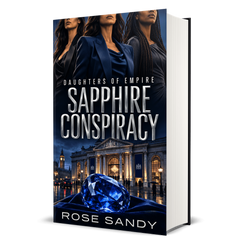
Sapphire Conspiracy: Daughters of Empire Series, Rose Sandy, Book 4

Sapphire Conspiracy: Daughters of Empire Series, Rose Sandy, Book 4

Action & adventure, Suspense, Drama, Crime & mystery, Thriller & suspense, and Romance

Every Silver Gravity story centres women with agency.

FREE instant Ebook version with every hardback, paperback or audio sale!

EBOOKS ARE DELIVERED INSTANTLY. YOUR DOWNLOAD LINK ARRIVES BY EMAIL RIGHT AFTER CHECKOUT. PAPERBACKS/HARDBACKS ARE PRINTED TO ORDER AND TYPICALLY SHIP IN 3–7 DAYS.

The auction is in Paris. The proof is in London. The crates leave at 8:45.

A clerk counted forty-seven things carried out of a household on a ridge west of Kampala and signed under his own count. The stone a woman set down on the table herself, so that it would be seen, never made his list.

More than a century later, Imani Makena, first reader through the door at Kew, finds a typed circular: a 183-carat star sapphire, seven rays and a fork in the third, held for the Heritage Acquisition Fund. Aryssa Oluska knows that stone. Her grandmother described it in a margin, and her mother told her to bring it home, not send it.

At Pellington's on New Bond Street, Aryssa walks into the preview as a buyer's agent called Dina Fadel and finds the Azure Heart exactly as her family said. By the end of that morning a Paris dealer, one of the three pre-qualified bidders, is found dead in his hotel room. Inaya Al-Sayed, who read the bidder list at a London fund and saw the words "under active management," fears the other two are next.

Sania Qureshi opens the stone's hidden data and finds fourteen sets of coordinates across six countries, measured outward from one ridge. Three mining houses want them buried. In Hatton Garden, a jeweler with a family ledger must decide whose side his warning is on, and Kwame Darko of the Special Cases Directorate is running out of days.

Across the city, journalist Jamie Kendran asks nothing about her work. He leaves his notebook in his coat. Tuesdays belong to them. This week she asks for a Monday.

The sale has been moved to a private treaty at an Alpine estate, to be signed at midnight on Saturday, under cover of the Collector's Ball. If the stone is sold, what it carries disappears with it. If the family reaches it first, the account they have carried for generations may finally be heard.

Some things do not belong to the people who hold them. The only question is who will carry them home.

The stone remembers what the family forgot.

Perfect for fans of ensemble conspiracy thrillers and globe-spanning heist suspense, with the slow-burn partnerships the series is known for.

Book 4 of the Daughters of Empire series.

About the Daughters of Empire Series: Action-Adventure Romance

The The Daughters of Empire Series follows three extraordinary women: Sania, Aryssa, and Inaya, descendants of nations shaped by empire, who are recruited into a covert organisation tasked with exposing hidden crimes linked to colonial power, stolen wealth, and historical injustice.

Each woman brings a unique expertise:

  • Sania: An Indian hacker and cyber-intelligence specialist skilled in surveillance, codebreaking, and digital infiltration
  • Aryssa: An African field operative with expertise in espionage, intelligence gathering, and high-risk missions
  • Inaya: A Middle Eastern corporate intelligence expert uncovering corruption hidden within elite institutions and financial systems

Together they investigate stolen artefacts, black-market networks, political conspiracies, and hidden histories that powerful people continue to profit from today.

The series combines:

  • Global espionage
  • Historical mystery and colonial legacy
  • International conspiracy
  • Action-adventure with female-led teams
  • Political and corporate corruption

Each novel stands alone while contributing to a wider world of reckoning, power, and truth.

What Kind of Thriller Is This?

This series is best described as:

Female-led international espionage and historical conspiracy thriller

Combining:

  • Covert operations and intelligence work
  • Colonial-era crimes with modern consequences
  • Political and corporate conspiracy
  • Action-adventure rooted in justice and accountability
  • Smart heroines driven by truth rather than power alone

If you enjoy thrillers where history itself becomes the crime scene, this series is written for you.

If You Love Spy Thrillers, Historical Conspiracies, or Smart Female Teams…

Readers who enjoy:

  • Jason Bourne for international pursuit and espionage
  • Tom Clancy for global politics and intelligence
  • Steve Berry for historical conspiracy and hidden artefacts
  • Female ensemble missions with emotional depth and moral complexity

…will likely enjoy The Daughters of Empire Series.

What sets this series apart is its exploration of empire, restitution, hidden systems, and who continues to benefit from history.

Story Tropes & Reader Appeal

This series features many reader-favourite thriller tropes:

  • Elite women operating inside dangerous systems
  • Hidden archives and secret societies
  • Stolen artefacts with global consequences
  • Covert agencies and impossible missions
  • Betrayal within powerful institutions
  • Race-against-time investigations
  • Black-market auction network
  • Colonial treasure vault

Is This Book For You?

You will likely enjoy this series if you love:

  • Female-led spy thrillers
  • Historical mysteries with present-day consequences
  • International conspiracies and global action
  • Books where exposing truth is more dangerous than hiding it

You will especially enjoy this instalment if you are fascinated by empire, restitution, hidden histories, and the systems that shape modern power.

Do I Need to Read the Series in Order?

Each Daughters of Empire novel contains its own central mission and can be enjoyed as a standalone.

Reading in order deepens understanding of:

  • The evolving relationships between Sania, Aryssa, and Inaya
  • Recurring institutions, enemies, and allies
  • The wider conspiracy connecting the series

 About Rose Sandy

Rose Sandy writes female-led espionage, conspiracy, and international thriller fiction centred on intelligent women confronting powerful systems.

Her stories combine history, politics, technology, and action, exploring what happens when hidden truths surface and who pays the price.

Rose Sandy’s work often features:

  • Smart female protagonists
  • Global settings and hidden networks
  • Historical mysteries with modern relevance
  • Ethical questions around power, wealth, and legacy

Genres & Themes

Genres:

  • Espionage Thriller
  • Historical Conspiracy Thriller
  • Political Thriller
  • International Action-Adventure
  • Mystery / Investigation Thriller

Core Themes:

  • Colonial legacy and historical injustice
  • Stolen artefacts and cultural restitution
  • Wealth hidden inside institutions
  • Female solidarity and trust under pressure
  • Corruption, secrecy, and inherited privilege
  • The fight to reclaim erased stories
View full details

Sapphire Conspiracy: Daughters of Empire Series, Rose Sandy, Book 4

Chapter 1

Imani Makena had been the first reader through the door at Kew on Monday morning, and she had spent the two days since pretending that this meant nothing.

The reading room admitted its first readers at nine. She had been on the pavement at ten to, with her pencils in a clear bag and her green scarf wound twice against a wind that came straight off the river, and when the doors opened she walked to the lockers like a woman with all the time in the world. The folder she had ordered the week before was waiting on its cart.

Gray board, tied with tape, stamped on the spine with the name of the Foundation’s heritage office. The Foundation’s former chair was in prison. Nobody had asked for his heritage files since the day he went in, and the clerk who wheeled the cart across to her had the look of a man handing over something he would be glad to see leave the building.

Most of it was what she had expected. Circulars about storage. Memoranda about insurance. A run of letters between people who had been dead for decades and had written to each other as if the whole world were listening. She turned pages for forty minutes with the patience of someone who had spent a working life in rooms made of paper, and she was beginning to compose the sentence she would write on her request slip, nothing of interest, when a single typed sheet slid from between two memoranda and landed face up on the table.

The sheet was a circular, undated, on the heritage office’s thin blue paper. A list of colonial-era jewels offered for placement with private holders, eleven lines in a clerk’s even type. She read down it with her pencil held an inch above the page, because pencils were not allowed to touch the sheets, and on the ninth line the type stopped being a list and became a sentence she knew.

Star sapphire, seven rays, 183 carats; held for the Heritage Acquisition Fund.

Imani read the line three times. Then she did what she always did when a page frightened her: she turned it face down, finished the folder, and photographed the sheet under the reading room’s rules, with the librarian watching. She carried the photograph out of Kew in her bag like a stone she had been asked to mind.

She told nobody on Monday. A page was a page, and a margin note was a margin note, and she had been wrong about the connection between two scraps of paper before. She put the photograph in a drawer at the archive and went home and ate standing at the counter, and on Tuesday night, a little after eight, Inaya’s report came in from Canary Wharf and the two things met on her screen like hands.

* * *

By ten to nine on Wednesday morning the Shoreditch archive smelled of toner and old cardboard, and Imani had been at her table for an hour.

The archive ran across the back of the building, long and low, with shelving to the ceiling and a single high window that let in a strip of gray. On her left screen was the photograph of the Kew sheet. On the right was the report Inaya had sent from a Canary Wharf pavement on Tuesday night: the Fund’s pending list, the Azure Heart’s entry in capitals, three names beneath it, and a line at the bottom that said only Thompson, stairwell, 19:30. Between the screens, on the table, lay the thing she trusted more than either.

This was her own index of Nakulu’s journals. Sixty-three volumes, and the originals lived in Aryssa’s flat in Brixton. The archive held the scans and Imani’s index of the nine objects Nakulu had traced from the declaration of forty-seven items: nine stones, bronzes and pieces of regalia, each with its volume and page and the line where her hand slowed down because she had found something at last.

She laid the Fund’s description beside the index and read both again. Seven rays. A fork in the third. A stone of that size, once worn at the throat on a gold collar.

She knew the line before she looked for it. She had been reading it for two years. It sat in the margin of volume sixty-two, in Nakulu’s smallest hand, beside an entry about something else entirely, and in two years Imani had read it as the sentence of a woman who wished to be right about a thing she could not prove.

She found it. The tenth, which I have not seen: seven rays, a fork in the third.

She checked the volume number. She checked the page. She set the Fund’s description against the margin a third time, ray for ray, and the two would not come apart.

That was the fact of it. The woman who had spent a lifetime looking for the tenth item had described, in the margin of a notebook, a stone that now sat in a financier’s folder under a reserve price marked confidential. Nakulu had died without seeing it. The index in front of Imani had nine entries because a clerk in a protectorate office had decided, more than a century ago, that forty-seven was the number he would write down.

The door opened behind her.

“You said you would bring it,” Imani said, without turning.

“I was waiting until you were finished.” Kwame came down the length of the archive with a mug in each hand, his sleeves rolled and his tie gone, and he looked like a man who had slept in a chair. “You never are, so I stopped waiting.”

“I am not finished. I never finish.”

“No.”

He set the mug beside her elbow, on the one clear corner of the table, with the handle turned to her right hand. Her green scarf lay over the chair back where she had left it. He looked at it and then at the index, and did not ask what she had found, because he could see it in how she was sitting. She did not look up. Neither of them touched anything that was not a cup.

“Ten o’clock,” he said. “The Director is on the link.”

“I know.”

“She will ask you for the household file.”

“I have it.” Imani put her hand flat on the index, over the margin line in her own copy. “I would like you to read this one before she does.”

He read it standing. The tea went cold at her elbow while he did it, and he did not move, and when he finished he laid one finger on the page, very lightly, under the word tenth, as a man lays a finger on a wound he has only been told about.

“Ten o’clock,” he said again, and went back down the archive to his own door.

* * *

At ten the second screen filled with Amara Ndiaye’s face.

She sat in her own office, in a gray jacket, with a plain wall behind her and nothing on it. Her voice carried the formal exactness Imani had come to expect from her: each word set down and left where it fell. Kwame stood at Imani’s shoulder. Neither of them sat.

“Ms. Makena. Mr. Darko.” Ndiaye looked at the Kew sheet, which Imani had put on the screen for her, and then at the index. She took her time. “This is the Special Cases Directorate’s matter from this hour.”

“Director,” Kwame said.

“We do not take a family’s property for a family.” Her eyes did not leave the page. “We find where it is and who holds it, and then the law does the rest. I want that understood before anyone in this building makes a promise to anyone outside it.”

“Understood,” Kwame said.

“Ms. Makena. Tell me what I am looking at, as you would tell a stranger.”

Imani told her. A circular with no date. A stone with seven rays and a fork in the third. A dead woman’s margin note, written years before the Fund existed, describing the same stone down to the fork. Ndiaye listened without moving, and when Imani said that Nakulu had searched for the tenth item for most of her life and died without finding it, the Director closed her eyes for exactly as long as it took to draw a breath.

“You have the household file,” she said.

“Yes, Director. The journals, the declaration, and what Ms. Oluska’s family has kept besides. Forty pages, with the index.”

“I want Ms. Oluska to have it today. She reads it before anyone speaks to her. She hears it from this room, not from a market.” Ndiaye paused, and her face showed that she was a person who had been awake before dawn. “It is her family’s account. She should not first meet it in a sale catalog.”

“She will be here at twenty past eleven,” Kwame said.

“Then she will read it standing, and she will want to sit down. See that there is a chair.” The Director looked at Kwame, and the look lasted a half-second longer than the sentence required. “That is all. I will have your full summary by evening.”

The screen went dark.

Kwame breathed out. Imani saw it in his shoulders, a small drop, as if a hand had been lifted from between them.

“She knows something,” Imani said.

“She knows what we have told her.” He said it evenly. Then he picked up his mug, found it empty, and put it down again. “I will meet Aryssa at the door.”

Imani pulled the forty pages and squared them on the table: the declaration with its forty-seven lines, her index, the three journal volumes that mattered, Nakulu’s own list of what she had never been able to place. She put the pages in the order a person would want them, with the margin line last. Then she fetched the better chair from the reading corner, the one with arms, and set it where the light from the window would not fall in a reader’s eyes. A small thing. In her experience the small things were the ones people remembered about the worst morning of a year.

Kwame watched her do it and said nothing. When she had finished he stood for a while at the end of the long table with his hands behind him, looking at the shelves.

“Eleven twenty,” he said at last, and went to wait by the door.

* * *

Aryssa came at twenty past eleven.

She came straight down the archive in her dark coat with the walk of someone who had been told something on a telephone and had decided not to hurry, and she stopped in front of Kwame’s desk and waited. She did not say hello.

“Your family,” Kwame said. “Read the file first.”

He gave it to her. Imani, at her table, was close enough to watch. Aryssa opened it standing, as the Director had predicted, and read the first page without moving. The second page she read with one hand flat against the desk. At the third she found the chair that had been put there and sat down in it without seeming to know she had done so.

She turned to the last page. Imani had put the margin line there, alone, with the index entry beside it, and Aryssa read it as a person reads a letter in a hand she has known all her life: the lips did not move, but the eyes went back to the start twice. She touched the paper with one finger at the word tenth and took the finger away again at once, as if it had warmed.

Nobody spoke. Beyond the high window a truck reversed and gave up. Imani looked at the margin line in her own copy and thought of the woman who had written it, and of the woman who was reading it now, and of how few people alive could have said which of the two had arrived first.

When Aryssa looked up her face had not changed at all. That was how Imani knew. A woman who had learned to keep her face still in rooms where stillness was a matter of life and death did not suddenly lose the skill because the room was kind. She had simply put the whole of it somewhere no one else could reach.

“Who else has seen this?”

“Kwame and I,” Imani said.

“Keep it that way.”

“That was the Director’s instruction as well.”

“Good.” Aryssa closed the file and kept her hand on it. “I would like to take it home tonight.”

“That is the Director’s instruction too,” Kwame said. “Out of the building tonight and back by nine.” He did not move from the edge of his desk. “I want to say one thing before you go, and I want you to hear it as a colleague and not as someone you are afraid of. This is your family’s account. It is also a case, with a clock and a buyer. Some days I will not be able to tell you which one you are standing in.”

“My family,” Aryssa said.

“Aryssa.”

“I am not asking for it to be personal. I am asking you to use it.” Her voice stayed level. “I know that stone. I know what the star looks like and where the third ray divides. I know what my mother was told by her mother, in what order and in whose voice. There is nobody you can put in a room who knows it as well. That is not sentiment. That is the only advantage we have.”

Kwame looked at her for a long time. Imani discovered that she had stopped breathing, and began again.

Then he picked up a pen, wrote something on the file cover, and held it out.

“Back by nine,” he said.

“Thank you.”

“Do not thank me. Read it.”

She nodded once and put the file under her arm. At the door she stopped, with her back to them and her hand on the frame, and spoke without turning.

“Nobody speaks to my mother before I do.”

The door closed behind her.

The Daughters of Empire Series by Rose Sandy

Read the series in order

Follow the Daughters of Empire through the collection’s configured reading order.

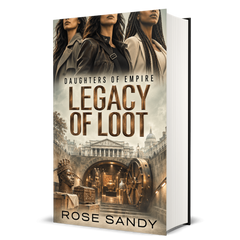
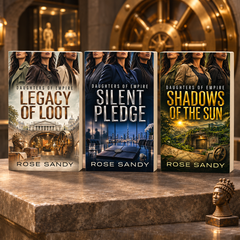
  1. 1Legacy of Loot: Daughters of Empire Series, Rose Sandy, Book 1
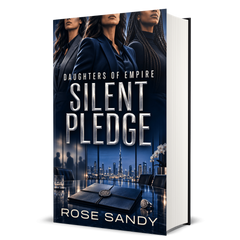
  2. 2Silent Pledge: Daughters of Empire Series, Rose Sandy, Book 2
  3. 3Shadows of the Sun: Daughters of Empire Series, Rose Sandy, Book 3
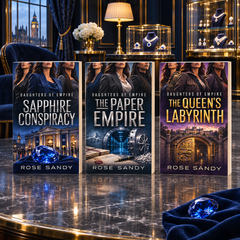
  4. 4Sapphire Conspiracy: Daughters of Empire Series, Rose Sandy, Book 4
    Sapphire Conspiracy: Daughters of Empire Series, Rose Sandy, Book 4
    Book 4 · Daughters of Empire Series
    You are here
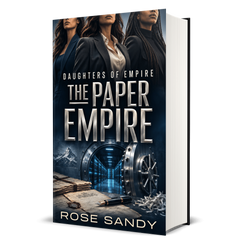
  5. 5The Paper Empire: Daughters of Empire Series, Rose Sandy, Book 5
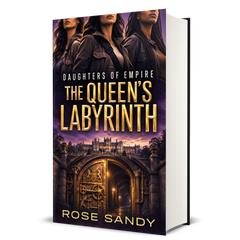
  6. 6The Queen's Labyrinth: The Daughters of Empire Series, Book 6
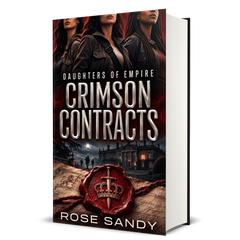
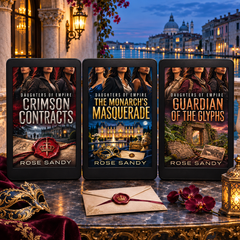
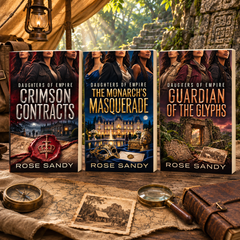
  7. 7Crimson Contracts: Daughters of Empire Series, Rose Sandy, Book 7
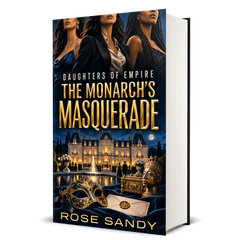
  8. 8The Monarch's Masquerade: Daughters of Empire Series, Rose Sandy, Book 8
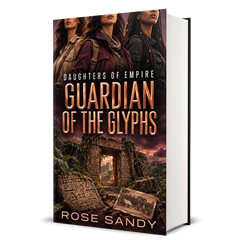
  9. 9Guardian of the Glyphs: Daughters of Empire Series, Rose Sandy, Book 9
  10. 10Shadows of Scotland Yard: Daughters of Empire Series, Rose Sandy, Book 10
  11. 11Cryptic Cartographers: Daughters of Empire Series, Rose Sandy, Book 11
  12. 12Daughters of Empire Ebook Bundle: Books 1–3, Legacy of Loot, Silent Pledge, Shadows of the Sun
  13. 13Daughters of Empire Ebook Bundle: Books 4–6: The Sapphire Conspiracy, The Paper Empire, The Queen's Labyrinth
  14. 14Daughters of Empire Ebook Bundle: Books 7–9, Crimson Contracts, The Monarch's Masquerade, Guardian of the Glyphs
  15. 15Daughters of Empire Paperback Bundle: Books 1–3, Legacy of Loot, Silent Pledge, Shadows of the Sun
  16. 16Daughters of Empire Paperback Bundle: Books 4-6: The Sapphire Conspiracy, The Paper Empire, The Queen's Labyrinth
  17. 17Daughters of Empire Paperback Bundle: Books 7–9, Crimson Contracts, The Monarch's Masquerade, Guardian of the Glyphs
1 of 2